Basement Leak Detection in Lawrence, NJ
Expert basement leak detection Lawrence NJ homeowners rely on to answer whether moisture is caused by a pressurized plumbing pipe or hydrostatic groundwater. Serving Lawrenceville, Slackwood, and nearby areas: (201) 510-1615.
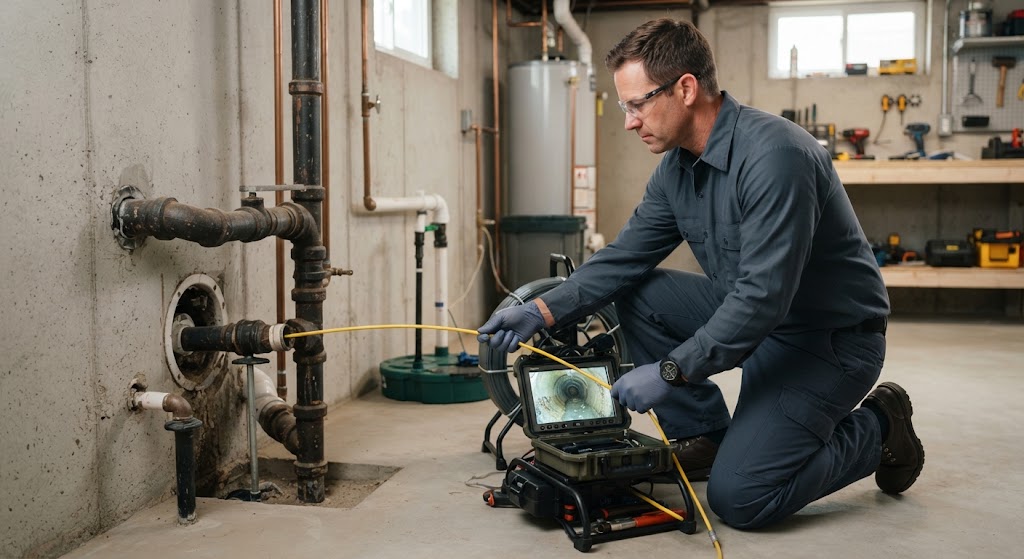
Differential diagnosis between plumbing leaks and foundation seepage in Lawrence, NJ.
Plumbing Leaks vs. Groundwater Seepage in Lawrence Basements
Discovering standing water or saturated carpeting in your basement can be alarming. Throughout Lawrence Township—from historic stone and block foundations in Lawrenceville to split-level basements in Slackwood and homes near the Princeton Pike corridor—basements often house the central core of domestic utilities: water heaters, main water meters, overhead copper distribution manifolds, and vertical sanitary drainage stacks.
One of the greatest dilemmas homeowners face is identifying the exact moisture origin. Is moisture entering through exterior masonry foundation walls due to high water table levels, or is a water in basement plumbing leak Lawrence issue silently spraying behind finished drywall? Water damage from a pressurized pipe requires an immediate plumbing repair, whereas foundation seepage requires drainage solutions. Confusing the two often leads to wasted money on unneeded waterproofing while a plumbing pipe continues to leak.
Warning Signs of a Basement Plumbing Leak
While foundation seepage usually follows heavy rainstorms, a wet basement leak Lawrence NJ originating from a plumbing defect persists constantly. Watch for these specific indicators:
Water Pooling During Dry Weather
Moisture accumulating on basement floors during extended dry spells points conclusively to pressurized plumbing supply lines, water heaters, or interior drainage fixtures.
Damp Drywall Along Interior Partitions
If water stains or mold growth appear along interior finished partition walls rather than exterior concrete foundation walls, supply or drain lines inside the wall are leaking.
Water Meter Dial Moving Constantly
If your municipal water meter's low-flow dial turns while all faucets and toilets are shut off, a pressurized supply line is actively discharging water into your basement.
Corrosion on Overhead Water Lines & Valves
Greenish oxidation, white mineral scaling, or hanging droplets along ceiling copper pipes, water heater nipples, or shut-off valves signal ongoing joint leakage.
Systematic Diagnostic Testing Method
Pinpointing a basement pipe leak Lawrence requires a definitive diagnostic testing sequence:
- Water Chemical Analysis: We perform on-site chlorine and fluoride testing on collected water samples. The presence of chemical disinfectants proves municipal tap water, eliminating groundwater confusion.
- Supply Line Pressure Decay Isolation: We isolate hot and cold supply systems using precision test gauges to detect minute pressure drops on closed loops.
- Thermal Imaging Analysis: Infrared cameras inspect finished drywall ceilings and framing, identifying hidden temperature tracks from weeping overhead pipes or water heater lines.
- Acoustic Listening Disc Testing: Electro-acoustic listening discs scan behind finished basement walls and subflooring to hear the high-frequency hiss of pinhole leaks.
- Drainage & Sump Line Dye Testing: Non-staining fluorescent dyes are introduced into plumbing stacks and sump discharge lines to check for cracked drain fittings.
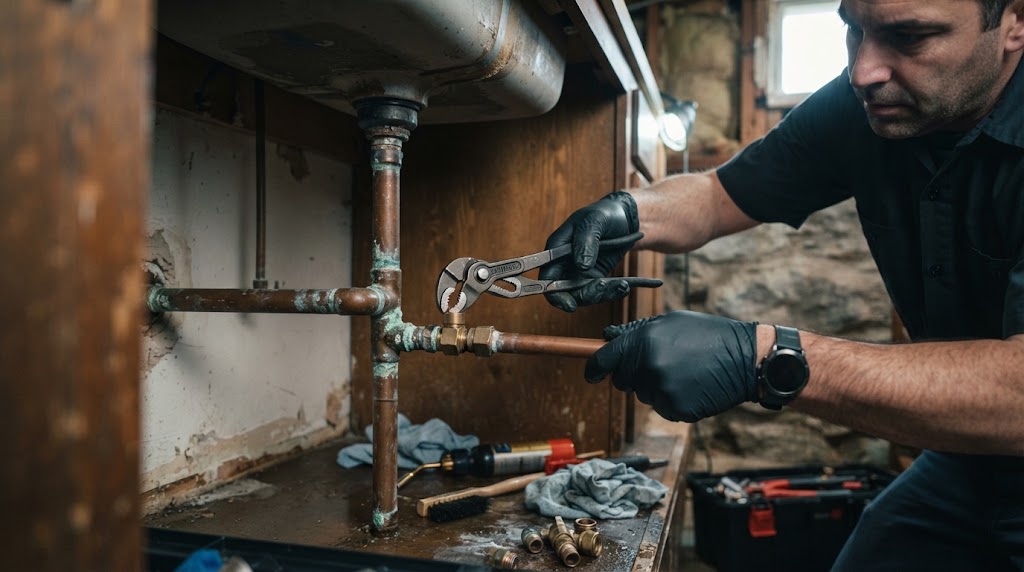
Uncertain Where Basement Water Is Originating?
Don't waste thousands on unnecessary foundation waterproofing before checking your plumbing. Speak with our Lawrence diagnostic specialists today.
What Happens After the Leak Is Found: Repair Options & Cost Factors
Once our non-invasive testing confirms whether the problem is a plumbing line or foundation moisture, you can proceed with targeted, cost-effective solutions:
- Supply Pipe Joint Repair: For pinhole copper leaks or corroded fittings, a licensed master plumber cuts out the damaged section and solders a clean replacement pipe sleeve or installs durable PEX.
- Water Heater & Valve Replacement: If the leak stems from a failing water heater tank or weeping shut-off valve, replacing the faulty fixture eliminates basement water pooling permanently.
- Drain Stack & Trap Repair: Leaks in vertical cast iron or PVC drain stacks are repaired with proper shielded mechanical couplings or new section transitions.
Repair costs vary based on pipe accessibility (exposed ceiling joists versus behind finished sheetrock), pipe material, and the extent of required structural dry-out. Pinpointing the exact source first ensures your investment goes directly to the true cause.
Prevention Tips & When a Basement Leak Is an Emergency
Inspect exposed basement water lines annually for mineral buildup or greenish copper corrosion. Test your main water shutoff valve twice a year to ensure it turns freely, and replace rubber washing machine hoses with braided stainless steel lines.
A basement leak is an emergency if water reaches within inches of electrical outlets, extension cords, or the main breaker panel, or if an overhead ceiling begins bowing heavily under trapped water. In an emergency, shut off the main water valve immediately from a dry location, turn off electrical power if safe, and call (201) 510-1615.
Common Neighborhoods & Related Services
Basement moisture investigations are common in older homes throughout Lawrenceville, residential streets in Slackwood, and neighborhoods bordering Ewing and Hamilton. Explore our related diagnostic solutions:
- Learn about non-invasive wall and ceiling inspections on our hidden water leak detection page.
- Check out our diagnostic services for underground yard pipes with water line leak detection.
- Review complete piping fixes on our pipe leak repair page.
- Return to our general leak detection in Lawrence page or explore our full service areas.
Frequently Asked Questions About Basement Leaks
How do you distinguish water in basement plumbing leak Lawrence from groundwater seepage?
We test water samples for residual chlorine and municipal disinfectants, monitor water meter movement while isolated, and perform hydrostatic pressure decay tests on plumbing supply pipes. Municipal tap water confirms a plumbing breach, while absence of chlorine during rain events indicates groundwater seepage.
Why are basement pipe leak Lawrence problems common in finished basements?
Finished basements conceal copper lines, drain stacks, and shut-off valves behind drywall, acoustic ceiling tiles, and subfloors. Condensation, vibration wear, and joint corrosion can seep unnoticed behind finished partitions until baseboards swell.
Can water heater leaks cause wet basement leak Lawrence NJ conditions?
Yes. Aging water heaters, failed temperature and pressure relief (T&P) valves, and corroded tank fittings can leak continuously into floor cavities, often trickling beneath partition walls and mimicking foundation water intrusion.
What should I do if water is pooling near my basement electrical panel?
Do not step into standing water. Shut off electricity from a dry main disconnect if safe, turn off your main water valve, and call (201) 510-1615 immediately for emergency diagnostic assistance.
Solve Your Basement Water Mystery in Lawrence Today
Get definitive answers before cutting walls or installing costly waterproofing. Call our Lawrence leak detection specialists today to schedule an inspection.